
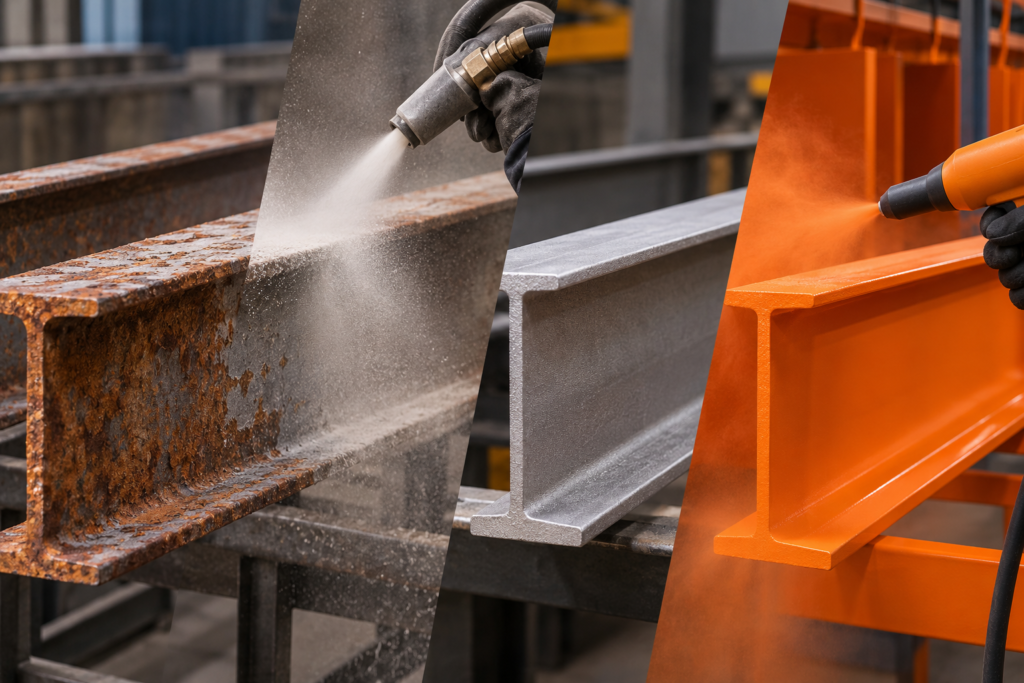
Powder coating provides a durable and attractive finish for metal surfaces. However, the coating can only perform well when the surface is properly prepared.
One of the most effective preparation methods is sandblasting before powder coating. This process removes rust, old coatings, mill scale, dirt, and other contaminants while creating a surface profile that helps the powder coating adhere properly.
But simply blasting the surface is not enough. The abrasive, blasting pressure, surface condition, and cleaning process all affect the final result.
In this guide, we will explain how to prepare a metal surface with sandblasting before powder coating and what you should check before applying the powder.
Why Is Sandblasting Important Before Powder Coating?
Powder coating needs a clean and properly prepared surface to achieve strong adhesion.
Metal surfaces often contain contaminants such as:
- Rust and corrosion
- Old paint or coating
- Oil and grease
- Dirt and dust
- Mill scale
- Oxidation
- Manufacturing residues
These contaminants can prevent the powder coating from bonding properly with the metal.
Sandblasting removes many of these contaminants mechanically. At the same time, abrasive blasting can create a controlled surface profile that gives the coating a better mechanical anchor.
Therefore, sandblasting before powder coating can improve both surface cleanliness and coating adhesion.
What Surface Preparation Is Required?
The required preparation depends on the condition and type of metal. However, a proper process generally includes several important stages.
1. Inspect the Metal Surface
Start by checking the condition of the metal.
Look for:
- Heavy rust
- Existing paint
- Grease or oil
- Weld spatter
- Mill scale
- Dirt and other contaminants
This inspection helps determine the appropriate abrasive and blasting method.
For example, heavily rusted carbon steel may require a more aggressive abrasive than a lightly contaminated surface.
2. Remove Oil and Grease First
Sandblasting should not be the first step when the surface contains heavy oil or grease.
Oil can contaminate the abrasive and spread across the surface during blasting. As a result, the metal may look clean but still have contaminants that interfere with powder coating adhesion.
For this reason, degrease oily surfaces before abrasive blasting.
A simple preparation sequence is:
Degreasing → Drying → Sandblasting → Cleaning → Powder Coating
This sequence helps prevent contaminants from being trapped underneath the coating.
3. Select the Right Abrasive
Choosing the correct abrasive is essential.
Different abrasive materials produce different cutting characteristics and surface profiles.
Common options include:
- Garnet – suitable for surface preparation and rust removal
- Aluminium oxide – aggressive and useful when stronger cutting action is required
- Glass beads – useful when a smoother finish is preferred
- Steel grit – commonly used for aggressive cleaning and surface profiling
- Steel shot – often used for cleaning and surface preparation where the application allows it
The right choice depends on the metal, contamination level, required surface profile, and blasting equipment.
Using an abrasive that is too aggressive can create an unnecessarily rough surface. On the other hand, an abrasive that is too mild may not remove the contamination effectively.
Read more : Sandblasting Before Powder Coating: What Surface Preparation Is Required?
4. Control the Blasting Pressure
Blasting pressure also affects the final surface.
Higher pressure can increase cleaning and cutting performance. However, excessive pressure may damage thinner materials or create an unsuitable surface profile.
Therefore, operators should adjust the pressure according to:
- Metal thickness
- Metal type
- Abrasive type
- Nozzle size
- Required surface profile
- Distance between nozzle and surface
The goal is not simply to use the highest possible pressure. Instead, the goal is to achieve the required level of cleanliness and profile efficiently.
5. Maintain the Correct Nozzle Distance and Angle
The blasting technique can significantly affect the result.
Keep the nozzle at a consistent working distance from the surface. Also, maintain a suitable blasting angle for the application.
An inconsistent distance can create uneven cleaning and surface profiles.
For large metal components, operators should also work systematically across the surface to avoid areas that receive too much or too little blasting.
After blasting, inspect the surface before applying powder coating.
A properly prepared surface should have a consistent texture without visible rust, old coating, oil, or other contaminants.
The required surface profile depends on the coating system and powder coating manufacturer’s specifications.
Avoid creating a profile that is significantly deeper than necessary. Excessive roughness can affect coating coverage and appearance.
For critical applications, use an appropriate surface profile measurement method rather than relying only on visual inspection.
7. Remove Abrasive Dust
After blasting, abrasive particles and dust can remain on the metal.
These particles should be removed before powder coating.
Use suitable methods such as:
- Clean, dry compressed air
- Industrial vacuum
- Clean brushes where appropriate
The surface should be free from loose abrasive and dust before moving to the next stage.
However, compressed air used for cleaning must be clean and dry. Moisture or oil from the compressor can contaminate the freshly blasted surface.
8. Prevent Flash Rust
Freshly blasted steel can be highly reactive, especially when exposed to moisture.
If the prepared metal is exposed to humid air for too long, flash rust can develop.
This is particularly important in humid environments.
To reduce the risk:
- Keep the blasted surface dry
- Control humidity where possible
- Avoid unnecessary delays before coating
- Follow the powder coating system’s preparation requirements
The shorter the time between final surface preparation and coating, the easier it is to maintain a clean surface.
9. Keep the Surface Free From Contamination
After blasting, avoid touching the prepared surface with bare hands.
Oil from fingerprints can contaminate the metal and potentially affect coating adhesion.
Use clean gloves when handling freshly prepared components.
Also keep the blasting and coating areas clean. Dust from other processes can settle on the surface before powder application.
Sandblasting vs Other Surface Preparation Methods
Sandblasting is not the only way to prepare metal before powder coating.
Depending on the application, other methods may include:
| Method | Main Purpose | Typical Application |
|---|---|---|
| Sandblasting | Cleaning and surface profiling | Rust, mill scale, old coatings |
| Degreasing | Oil and grease removal | New or contaminated metal |
| Chemical cleaning | Contaminant removal | Specific industrial applications |
| Mechanical grinding | Localized cleaning | Welds, heavy rust, repairs |
| Phosphating | Chemical conversion coating | Powder coating systems |
In many applications, these methods can work together.
For example, a heavily contaminated steel component may require degreasing followed by abrasive blasting before powder coating.
What Happens If You Skip Sandblasting?
Not every powder coating project requires abrasive blasting. However, inadequate surface preparation can create coating problems.
Potential issues include:
- Poor adhesion
- Peeling
- Flaking
- Uneven coating
- Premature corrosion
- Reduced coating durability
- Contamination trapped under the coating
A visually clean surface does not always mean the surface is properly prepared.
The preparation method should therefore match the metal condition and powder coating system.
How to Choose an Abrasive for Powder Coating Preparation
There is no single abrasive that works best for every application.
Consider these factors before selecting your media:
Surface Condition
Heavily rusted steel may require a more aggressive abrasive, while lightly contaminated surfaces may need less aggressive media.
Metal Type
Different metals have different hardness and sensitivity to abrasive impact.
Thin or softer materials require more careful control to avoid unnecessary surface damage or distortion.
Required Surface Profile
The abrasive should create a suitable profile for the coating system without producing excessive roughness.
Desired Productivity
Abrasive cutting efficiency affects blasting speed and media consumption.
Equipment
Your blast pot, nozzle size, air pressure, compressor capacity, and recovery system also influence abrasive selection.
A Practical Sandblasting Process Before Powder Coating
A typical workflow can look like this:
1. Inspect the surface
↓
2. Remove oil and grease
↓
3. Select the appropriate abrasive
↓
4. Set blasting pressure and nozzle conditions
↓
5. Blast the surface evenly
↓
6. Inspect cleanliness and surface profile
↓
7. Remove dust and loose abrasive
↓
8. Keep the surface dry and protected
↓
9. Apply powder coating according to the coating system requirements
Following a consistent process helps reduce preparation-related coating failures.
Common Mistakes When Sandblasting Before Powder Coating
Using Contaminated Abrasive
Dirty or contaminated abrasive can transfer contaminants to the surface.
Using Excessive Pressure
Too much pressure can create an unnecessarily aggressive surface profile or damage thin materials.
Ignoring Moisture
Moisture can contribute to flash rust and contamination.
Delaying Powder Coating
A freshly blasted surface should not be left exposed unnecessarily.
Touching the Prepared Surface
Bare hands can transfer oil and contaminants back onto the metal.
Focusing Only on Visual Cleanliness
A surface can look clean while still having contamination or an unsuitable surface profile.
Final Checklist Before Powder Coating
Before sending the component to the powder coating stage, check the following:
- Rust and old coating have been removed
- Oil and grease have been removed
- The surface profile is suitable for the coating system
- Loose abrasive has been removed
- Dust has been removed
- The surface is dry
- No visible flash rust has developed
- The surface has not been contaminated after blasting
- Powder coating can begin within the required preparation window
Conclusion
Sandblasting before powder coating is an important surface preparation method for many metal applications. It can remove rust, old coatings, mill scale, and other contaminants while creating a suitable surface profile for coating adhesion.
However, good results depend on more than simply blasting the metal. Abrasive selection, pressure, nozzle technique, surface cleanliness, moisture control, and the time between blasting and coating all matter.
For the best result, always match the blasting process to the metal condition and the requirements of the powder coating system.
If you need abrasive media for surface preparation, choosing the right media based on the material and required finish can also help improve blasting efficiency and coating performance.